About the Longview Community
A private, gated golf community set on gently rolling terrain along the Union County line — quietly recognized as one of the Carolinas' most refined addresses.
Part of our complete guide to Longview Country Club.
In the quiet, rolling topography of Union County, where the exurban edge of Charlotte gives way to a more pastoral landscape, lies a community conceived with an unusual degree of specificity and ambition. The Club at Longview is not merely a collection of high-end homes arrayed around a golf course; it is a fully realized residential enclave built upon a singular aesthetic and a carefully cultivated atmosphere of private, resort-style living. From its inception, the project was envisioned as a departure from the prevailing trends in Charlotte-area luxury development. Where others might have focused on rapid expansion or a broader market appeal, Longview’s developers pursued a more patient and exacting course, establishing a Jack Nicklaus Signature golf course as the community’s heart and mandating a European-manor architectural vernacular that would give the entire property a mature, old-world feel from its very first days. This foundational commitment to a cohesive, immersive environment has shaped every aspect of the community, from the grand allee of trees that marks its entrance to the winding streetscapes and the deliberate preservation of natural vistas. It is a place that feels both established and apart, a pocket of Carolina highlands reimagined as a timeless European estate, all within a short drive of one of the nation’s most dynamic cities.
The decision to place such a community in Waxhaw, a historic town once defined by its railroad and textile roots, was a strategic one. It situated Longview in a region known for its strong schools, favorable tax structure, and a quality of life that feels distinctly removed from the urban core’s congestion. This positioning allows residents to access the professional, cultural, and logistical advantages of Charlotte while returning to a sanctuary of genuine tranquility. The community’s master plan reflects this duality. Inside the gates, the landscape is meticulously sculpted, the amenities are comprehensive, and the sense of privacy is paramount. Yet, the connection to the surrounding area remains vital. The growth of south Charlotte and Union County has brought a sophisticated infrastructure of dining, retail, and services to Longview’s doorstep, creating a self-contained world that is, nevertheless, conveniently integrated into its broader context. This careful balance—between seclusion and access, between a curated vision and the authentic character of its Carolina setting—is central to understanding Longview’s identity and its enduring appeal to a discerning residential audience.
At its core, Longview represents a specific answer to the question of what a private residential club community can be in the 21st-century American South. It is a testament to the power of a unified architectural and landscaping vision, where every home contributes to a collective aesthetic and the grounds are treated as a grand, contiguous park. The golf course, a celebrated Jack Nicklaus Signature design, serves as more than a recreational asset; it is the primary organizing principle of the land plan, a source of sweeping views, and the stage for much of the community’s social life. Life here proceeds at a different cadence, dictated less by the rhythms of the city and more by the seasons of the golf course, the calendar of club events, and the simple pleasure of an evening stroll along manicured paths. It has attracted a particular type of resident: one who values discretion over ostentation, who appreciates the subtleties of fine craftsmanship, and who seeks a community of peers in a setting of profound beauty and security. Longview is not merely a place to live; it is a lifestyle pursued with intention.
The Waxhaw Position: A Regional Context
The selection of Waxhaw, North Carolina, as the site for Longview was a defining choice that continues to shape the community’s character. Situated in Union County, just south of Charlotte’s affluent SouthPark and Ballantyne districts, Waxhaw provides a setting that is at once connected and purposefully distinct. In the early 2000s, as Charlotte’s northward and westward expansion accelerated, this southward push into Union County represented a strategic move toward a landscape of rolling hills, open farmland, and a quieter pace of life. The area offered the essential ingredients for a large-scale private community: available tracts of beautiful land, a favorable tax environment, and a location that felt like a genuine retreat without being inconveniently remote. The Charlotte-Douglas International Airport, the commercial hubs of the city, and top-tier medical facilities are all within a manageable drive, allowing Longview to function as a viable home for active professionals and executives, not just retirees.
Decades ago, Waxhaw was a small, historic town, its identity tied to the railroad and a quaint downtown. The arrival of communities like Longview, and the broader residential growth in the surrounding area, has transformed the region into one of the most prosperous in the state. This growth has been managed with a degree of care, preserving the town’s historic core while welcoming a new, sophisticated infrastructure of dining, boutique retail, and essential services. For Longview residents, this means the convenience of having high-quality amenities just outside the gates, complementing the private offerings of the club. The area is also known for its highly-regarded public and private schools, making it a compelling choice for families seeking an environment that supports both an elevated lifestyle and strong educational opportunities. Longview exists within this ecosystem not as an isolated fortress, but as a key anchor of the region’s luxury market, contributing to and benefiting from the sophisticated character of the southern Charlotte metro.
The very topography of Union County is integral to Longview’s appeal. Unlike the flatter terrain in other parts of the Charlotte region, this area is characterized by gentle, rolling hills, mature hardwoods, and meandering creeks—a landscape that provided a rich canvas for golf course architect Jack Nicklaus and the community’s land planners. The decision to embrace this terrain, rather than flatten it, resulted in a community with varied elevations, winding roads, and homesites that offer a diverse range of views, from intimate woodland settings to panoramic vistas across the golf course. The drive from the congestion of central Charlotte south along Providence Road or Rea Road is a tangible transition, as the commercial density gives way to horse farms and wooded estates. Arriving at Longview feels like the final step in this journey, a deliberate passage into a carefully conceived world that leverages the best of its natural Carolina setting.
Master Planning: The Genesis of a Cohesive Vision
The Longview community is a product of intensive, front-loaded master planning, a process that prioritized a singular, cohesive aesthetic and a high-quality residential experience above all else. Before the first homesite was ever sold, the developers made foundational decisions that would dictate the community’s character for decades to come. The central, non-negotiable anchor was the creation of a Jack Nicklaus Signature Golf Course, a designation that carries significant weight in the world of golf architecture. This was not merely a branding exercise; it signified a direct and ongoing involvement from Nicklaus himself in the design process, ensuring a course of genuine international standing. The routing of the course became the skeleton of the entire community, with residential parcels carefully plotted to maximize views, preserve natural corridors, and create a sense of harmony between the built and natural environments.
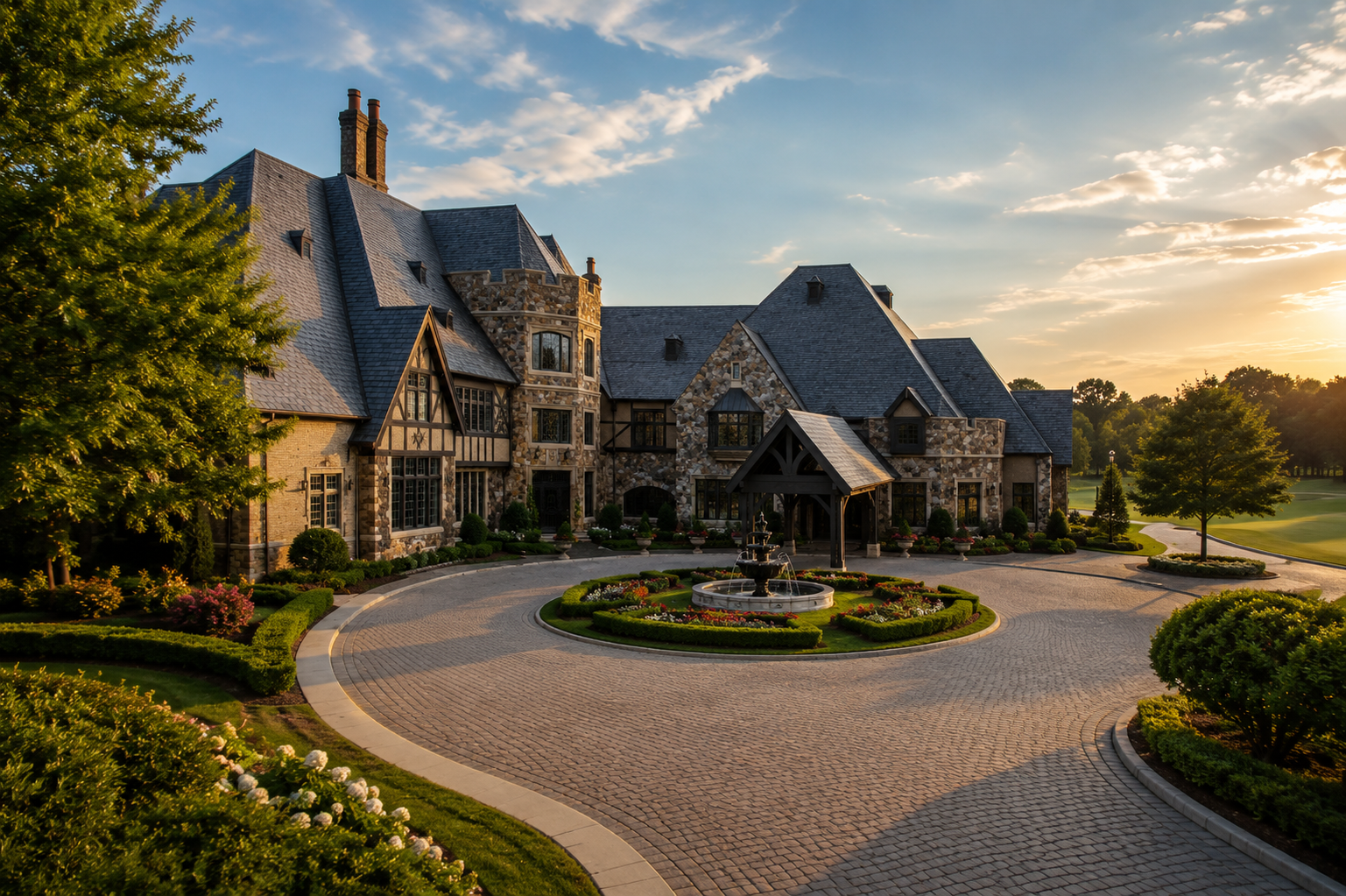
Parallel to the golf course design was the establishment of a strict architectural code. The developers mandated a style rooted in Old-World European and English manor precedents, a choice that instantly distinguished Longview from the mix-and-match styles prevalent in many other upscale developments. This was a bold and financially demanding commitment, requiring the use of authentic, high-quality materials like natural stone, slate, cedar shake, and true stucco. By creating and enforcing these rigorous standards, the master plan ensured that every home constructed within the gates, regardless of its specific size or footprint, would contribute to a unified, estate-like atmosphere. The effect is a visual coherence that lends the entire community a sense of permanence and gravitas, as if it has been evolving organically for a century.
The land plan itself demonstrates a patient, strategic approach to luxury development. Rather than maximizing the number of homesites, the plan emphasized the quality of each one. Lots were designed to be generous, affording a degree of privacy that is a true luxury. Roads were designed to curve with the topography, slowing traffic and creating an unfolding sequence of views. Significant attention was paid to the landscape architecture beyond the golf course fairways, including the grand, tree-lined entrance, the formal gardens surrounding the clubhouse, and the miles of walking trails that knit the community together. This comprehensive approach—integrating golf, architecture, and landscape architecture into a single, seamless vision—is the defining feature of Longview’s master plan. It created not just a place to build a house, but a complete, immersive environment for living.
The Signature Golf Landscape
At the heart of Longview, both literally and figuratively, is the Jack Nicklaus Signature Golf Course. The course is the community’s central organizing principle, a sprawling green sanctuary that dictates the views, the rhythm of life, and the property’s overarching identity. A ‘Signature’ designation is the highest tier of Nicklaus design, indicating deep, personal involvement from the master architect himself throughout the conception and construction process. The result is a course that reflects his core design philosophies: strategic challenge, fairness, and a profound respect for the natural terrain. The routing flows gracefully across the rolling Union County landscape, leveraging existing ridges, valleys, and water features to create a varied and memorable 18-hole journey. It is a course that Nicklaus himself has praised, and it stands as one of the most respected modern designs in the Carolinas.
The character of the golf experience at Longview is one of classic, parkland-style grandeur. Nicklaus and his team made excellent use of the property’s elevation changes, creating a number of dramatic tee shots and challenging approaches to well-guarded greens. The course does not rely on gimmicks; its difficulty and its beauty stem from sound strategic principles. Generous landing areas are often visible from the tee, but the optimal angle of approach requires careful thought and precise execution. The green complexes are intricate, with subtle undulations and challenging bunkering that demand a deft short game. The conditioning is maintained to a standard befitting a club of this stature, with firm, fast greens and meticulously manicured fairways that highlight the contours of the land.
More than just a venue for sport, the golf course serves as a vast, shared park for the entire community. The land plan was executed with such care that a significant number of homes enjoy panoramic views of the fairways, greens, and the preserved natural spaces in between. These long views are a key element of the residential experience, providing a constant connection to a serene, manicured landscape. For golfers, the club offers an experience predicated on privacy and access—the luxury of playing a renowned course without the crowds of a public or resort facility. For non-golfers, the course is an essential part of the scenery, a beautiful, ever-present backdrop that defines the unique sense of place that is Longview.
An Architectural Portrait: Old-World Craftsmanship
The architectural identity of Longview is one of its most distinct and consistently executed features. The community’s design guidelines mandate a style inspired by the grand manor homes and country estates of Europe, a choice that imbues the entire neighborhood with a sense of timelessness and substance. This is not a superficial application of stylistic elements; it is a deep commitment to the principles of classical residential architecture, emphasizing authentic materials, correct proportions, and a high level of custom craftsmanship. The result is a streetscape that feels more like a historic European village or a collection of established country estates than a modern American subdivision. Each home, while unique, adheres to a shared language of design that contributes to the powerful, cohesive vision of the community as a whole.
The material palette is fundamental to this aesthetic. Exteriors are dominated by natural, substantial materials such as quarried stone, hand-tossed brick, genuine stucco, and heavy-timber accents. Rooflines are complex and compelling, often featuring steep pitches, multiple gables, and the use of authentic slate or thick cedar shakes. Details are paramount: copper gutters and flashing, custom-milled wood windows, wrought-iron railings, and gas lanterns are common features that signal a commitment to quality over expedience. The massing of the homes is also crucial; rather than presenting a single, monolithic facade, the designs often employ a clustered, additive approach, as if the home has evolved over generations. This creates a rich and varied architectural texture that is both visually interesting and historically resonant.
This architectural vision is brought to life by a select group of the region's top custom homebuilders and architects, who work with property owners to create residences that are both personally tailored and contextually appropriate. The community’s architectural review board plays a crucial role in maintaining the integrity of the original vision, ensuring that new construction and any renovations adhere to the established standards. This process, while rigorous, is what protects the aesthetic and financial investment of every homeowner. By enforcing a consistent, high-quality architectural vernacular, Longview has created a built environment that feels permanent, authentic, and deeply rooted in a tradition of fine homebuilding. It is an architecture of substance, designed to mature gracefully and endure for centuries.
The Residential Experience: Privacy and Community
To live within the gates of Longview is to experience a carefully calibrated balance between profound privacy and engaged community. The master plan was conceived with this duality in mind, providing homeowners with a personal sanctuary while offering ample opportunity for social connection centered around the club. The generosity of the homesites, the mature landscaping, and the winding layout of the streets all contribute to a sense of seclusion. Homes are sited to maximize views of the golf course or preserved woodlands, while minimizing sightlines to adjacent properties. This deliberate design creates the feeling of living in a large, private park, where the primary backdrop is one of sculpted nature rather than neighboring houses.
This baseline of privacy allows residents to engage with the community on their own terms. The social hub is the grand, 40,000-square-foot clubhouse, which functions as a de facto town center. It is here that neighbors connect, friendships are forged, and the community comes together. The club hosts a full calendar of social events, from formal wine dinners and holiday galas to casual themed cookouts and family-friendly activities. This programming is designed to appeal to a multi-generational membership, providing avenues for connection for young families, empty-nesters, and active retirees alike. The shared experience of being a member of the club creates a common bond that transcends the normal neighborly relationship, fostering a palpable sense of belonging.
Beyond the formal structure of the club, a more organic sense of community thrives. It’s found in informal golf games, in neighbors meeting on the walking trails, in children playing at the family activity center, and in groups gathering for a post-match drink at the clubhouse grill. Security and service are fundamental to this experience. The gated entrance and 24-hour security patrol provide a level of safety and peace of mind that allows for a more relaxed and open way of living within the enclave. The attentive, high-touch service from the club staff further enhances the residential experience, handling the details of daily life with a professional grace that is central to the community’s promise. This synthesis of personal retreat and vibrant social life is the essence of the Longview residential experience—a self-contained world designed for comfort, connection, and contentment.
The Rhythm of Life at Longview
Daily life at Longview unfolds at a cadence distinctly its own, shaped by the tranquil environment and the comprehensive amenities of the club. For many, the day begins not with the sound of city traffic, but with the quiet hum of landscaping crews preparing the golf course, or the sight of early morning light filtering across a fairway. The rhythm is less about the frenetic pace of the outside world and more about personal choice and recreational pursuits. For the avid golfer, a morning might be anchored by a tee time, followed by lunch at the club’s casual grill. For a family, the day could revolve around the pools and the youth lodge, or a group tennis lesson with one of the resident pros.
The community’s design and amenities encourage an active, outdoor-oriented lifestyle. Miles of wide, meandering walking and jogging paths are in constant use, populated by residents walking dogs, parents pushing strollers, and individuals seeking a quiet moment of exercise and reflection. The tennis facilities, with their multiple courts and active programming, are another hub of daily activity, fostering a dedicated sub-community of players. Evenings often carry their own distinct rhythm. As the sun sets over the 18th hole, the clubhouse comes alive in a different way. The terraces fill with members enjoying a cocktail, the dining rooms buzz with conversation, and the soft glow of gas lanterns illuminates the stone facades.
Yet, the lifestyle is not solely defined by programmed activities. There is a quieter, more domestic rhythm as well. It is the experience of preparing a meal in a kitchen that overlooks a serene, wooded preserve, or the simple pleasure of reading a book on a private stone terrace. It is the sense of security that allows children to ride their bikes on the quiet streets, or the convenience of having world-class fitness and wellness facilities just a short golf-cart ride away. While a significant portion of the residents may be active C-suite executives, entrepreneurs, and professionals who commute into Charlotte, the moment they pass through the gates, they are entering a different sphere. The Longview rhythm is a deliberate counterpoint to the demands of modern professional life—a calibrated environment designed to restore, relax, and foster a deeper connection with family, nature, and community.
The Clubhouse and Amenity Core
The physical and social anchor of The Club at Longview is its expansive, elegantly appointed clubhouse. At approximately 40,000 square feet, the structure is more than just a functional building; it is a statement of intent, designed in the same Old-World European vernacular as the community’s residences. Clad in stone and stucco with a sweeping slate roof, the clubhouse presides over the 18th green, offering commanding views of the finishing hole and the surrounding landscape. It functions as a grand private manor for all members, providing a range of spaces for dining, socializing, and wellness, all marked by a sophisticated but comfortable atmosphere. The interior design eschews fleeting trends in favor of a timeless aesthetic, with dark wood paneling, fine fabrics, substantial furnishings, and a curated collection of art.
Within this impressive edifice are multiple dining venues, each with a distinct purpose and ambiance. A formal dining room hosts elegant dinners and special club events, while a more relaxed grill and bar provide the perfect setting for a post-round meal or a casual weeknight family dinner. The extensive verandas and terraces are perhaps the most popular spaces, allowing members to dine and socialize al fresco while taking in the commanding views of the golf course. The clubhouse also houses a well-stocked wine cellar, private meeting rooms, and elegantly appointed locker rooms that feel more like private parlors, complete with lounges, attendants, and steam rooms.
Beyond the main clubhouse, the amenity core extends to a comprehensive set of recreational facilities designed to cater to a multi-generational membership. A dedicated tennis center, featuring numerous lighted courts and a professional staff, supports a vibrant tennis community with clinics, leagues, and tournaments. The fitness center is a state-of-the-art facility, equipped with a full range of modern cardio and strength-training equipment, as well as studios for yoga, Pilates, and group fitness classes. The aquatic center is a significant draw, particularly for families, comprising multiple pools, including a resort-style pool for leisure, a lap pool for fitness, and a popular water slide and splash area for younger children. This entire complex, managed and serviced with the same attention to detail as the golf operations, creates a complete, resort-like ecosystem that forms the backbone of daily life within the community.
A Note on This Independent Guide
This website and the editorial content presented herein are the product of independent research and analysis. We are not affiliated with, endorsed by, or acting on behalf of The Club at Longview, its ownership, its management, or its sales and marketing teams. Our purpose is to provide a comprehensive, objective, and discerning portrait of the community for an audience of prospective residents, existing homeowners, and design and real estate professionals. The voice and perspective are entirely our own, crafted to be an authoritative third-party resource, akin to a feature in a high-end architectural or lifestyle journal.
Our methodology is based on publicly available information, historical records, and direct, on-the-ground observation of the community’s architecture, landscape, and overall character. We do not have access to private club statistics, membership figures, real estate sales data, or other proprietary information. Therefore, we deliberately avoid making claims about specific financial details, membership costs, or real estate values. Instead, our focus is on the qualitative aspects of Longview: the vision behind its master plan, the character of its architecture, the quality of its amenities, and its position within the broader Charlotte luxury market. We describe the 'what' and the 'why,' not the 'how much.'
The goal is to offer a perspective that is both appreciative and critical, in the most constructive sense of the word. We believe that a community of this caliber merits a serious and thoughtful examination, free from the language of marketing and sales. By maintaining this editorial independence, we aim to create a trustworthy and valuable resource for those who wish to understand the essence of Longview—what makes it a significant and enduring example of private residential community design in the American Southeast. All photography and descriptions are intended to serve this editorial purpose.
The Regional Context: Longview and Its Peers
To fully appreciate Longview's position, it is useful to consider it in relation to its peers in the Charlotte luxury real estate market. Communities such as The Sanctuary, Skyecroft, Providence Country Club, Firethorne, and the broader Weddington area each represent a different vision of high-end living. Longview's distinction lies in its unique combination of a destination-quality golf experience and a rigorously enforced, Old-World architectural aesthetic. No other community in the region has pursued this specific combination with such singular focus. Skyecroft, located nearby in Weddington, shares a similar European-inspired architectural theme but is not a golf community, centering its identity instead on its gated, estate-home environment. Its appeal is to those who prioritize the home and neighborhood character above a specific recreational amenity.
The Sanctuary, on the western side of Charlotte on Lake Wylie, offers a profoundly different interpretation of luxury. It is a community defined by its relationship to nature and water, with sprawling, multi-acre lots (many exceeding ten acres) that afford an almost rustic sense of privacy. The architectural style there is more varied, and the ethos is one of a private nature preserve, appealing to those who desire space and seclusion above all else. In contrast, Longview offers a more manicured version of 'nature,' with a tighter, more cohesive community feel centered around the social life of the club. Providence Country Club and Firethorne are more traditional country club communities, with excellent golf and amenities, but they developed over a longer period and thus feature a more eclectic mix of architectural styles, primarily from the 1990s and 2000s. They feel more like quintessential Charlotte suburban luxury, whereas Longview feels like a world apart.
The town of Weddington itself, known for its large lots and low tax rate, represents a more diffuse version of luxury living. It is a collection of fine homes and smaller subdivisions, rather than a single, master-planned community with a centralizing amenity like a club. The appeal of Weddington is the ability to have a large home and property with a degree of autonomy. Longview presents a contrasting proposition: one chooses Longview not just for the property, but for entry into a comprehensive, curated lifestyle. It appeals to a buyer who sees value in a unified aesthetic, a built-in social infrastructure, and the specific recreational focus provided by its Jack Nicklaus Signature course. Longview’s niche is for the buyer who wants the privacy of an estate but also the community and amenities of a high-end resort, all captured within a single, visually harmonious work of place-making.
The Profile of a Longview Resident
The residents who choose to make their homes in Longview are a self-selecting group, drawn by a specific set of values that align with the community’s foundational principles. While wealth is an obvious prerequisite, the psychographic profile of a Longview resident is more nuanced than mere financial success. These are individuals and families who typically possess a sophisticated appreciation for quality, craftsmanship, and design. They understand the difference between fleeting luxury trends and enduring substance, and they see the value in a community where every home contributes to a cohesive, elevated aesthetic. The decision to build or buy in Longview is often a vote for a specific, European-inspired architectural vision and a rejection of the more heterogeneous styles found elsewhere.
A desire for privacy without isolation is another defining characteristic. The Longview resident values the security of a gated community and the seclusion afforded by a generous, well-landscaped homesite. They seek a sanctuary from the demands of public and professional life. However, they are not recluses. The same resident who values a quiet evening on their private terrace also values the built-in social life of the club. They are drawn to the idea of a community of peers—other successful, discerning individuals who share a similar lifestyle and set of interests. The club acts as a social filter and a facilitator, providing a ready-made network of friends and neighbors for those who may be relocating to Charlotte or simply seeking a more engaged community life.
The community is home to a mix of residents, including C-suite executives of Fortune 500 companies, founders of successful private enterprises, prominent surgeons and attorneys, and active retirees who have chosen Longview as their primary or secondary residence. Many are avid golfers, drawn by the caliber of the Nicklaus Signature course and the ease of access that a private club provides. However, a significant portion of the community is made up of non-golfers who are attracted by the other amenities, the security, the architectural beauty, and the family-oriented environment. Ultimately, the unifying trait is a preference for quiet authority over overt display. Longview is a place where substance is valued over show, and the ultimate luxury is the seamless, beautifully executed living environment itself.
An Enduring Vision
More than two decades after its conception, The Club at Longview has matured into a community that has largely fulfilled its ambitious founding vision. In an era of rapid development and shifting tastes, its adherence to its core principles—a singular architectural style, a central, world-class golf amenity, and an emphasis on a private, club-centric lifestyle—has allowed it to maintain a distinct and respected position in the hierarchy of southeastern residential enclaves. The trees along the entrance allee have grown tall, the stone and slate on the homes have acquired a subtle patina, and the landscape has settled into a state of lush maturity. The community no longer feels new; it feels established, permanent.
This sense of permanence is perhaps its greatest asset. The rigorous master plan and architectural controls, which may have seemed restrictive to some at the outset, have proven to be the essential guardians of the community’s character and, by extension, its value. Homeowners have the confidence that their significant investment is protected by a shared commitment to quality that extends to every property within the gates. This stability, combined with the unparalleled privacy and security, has created a powerful draw for a discerning clientele seeking refuge from the unpredictability of the outside world. Longview has become a known quantity, a benchmark for cohesive, high-end community design.
As the Charlotte region continues to grow and evolve, Longview's appeal is likely to intensify. The contrast between its tranquil, manicured world and the increasing density of the surrounding metro area becomes more pronounced each year. It remains a testament to the idea that a residential community can be more than the sum of its parts; it can be a work of art in its own right, a place of profound beauty and order. For those who appreciate the subtleties of classic architecture, the strategic brilliance of a great golf course, and the quiet comforts of a well-lived life among peers, Longview endures not as a development, but as a destination—a carefully crafted ideal of southern living, realized.
Questions & Answers
What primarily distinguishes Longview from other luxury communities in the Charlotte area?
Longview's key distinction is its fusion of a mandatory, Old-World European architectural style with a Jack Nicklaus Signature golf course as its centerpiece. This creates a uniquely cohesive and immersive estate environment not found in other regional communities, which may offer golf or high-end homes, but not this specific, rigorously enforced combination.
Is membership in The Club at Longview required for all homeowners?
Club membership and homeownership are separate matters. Requirements can change and may differ by property, so buyers should confirm the current obligation for a specific home with both the club and the residential association before closing.
How would one broadly describe the architectural style of the homes?
The architectural vernacular is strictly defined as "Old-World," drawing inspiration from classic European and English country manors. This is expressed through the use of authentic materials like natural stone, slate, and true stucco, with an emphasis on traditional massing and fine, custom detail.
What is the relationship between the Longview community and the town of Waxhaw?
Longview is a private, gated community located within the town of Waxhaw. While it operates as a self-contained enclave, it is a significant part of Waxhaw's tax base and its upscale identity, and residents benefit from the town's services and the high quality of life in the surrounding Union County area.
Does the community feel isolated, or is it well-connected to the city of Charlotte?
The community is designed to feel like a tranquil retreat, but it remains well-connected to Charlotte. Key commercial centers like Ballantyne and SouthPark, as well as Uptown Charlotte and the international airport, are all within a reasonable commute, offering a balance of seclusion and access.
What is the significance of the golf course being a Jack Nicklaus 'Signature' design?
A 'Signature' course is the highest tier of design from Nicklaus Design, indicating significant personal involvement from Jack Nicklaus himself in the design and on-site development. This designation ensures a high level of strategic quality and prestige, making the course a genuine centerpiece rather than just another amenity.
What is the general topography and landscape of Longview like?
The community is set on a piece of land with rolling hills, mature hardwood forests, and natural creeks, characteristic of the Carolina Piedmont. The master plan and golf course routing were designed to preserve and accentuate this natural topography, resulting in varied elevations and scenic vistas throughout the property.
Is Longview a community exclusively for avid golfers?
While the world-class golf course is a primary draw for many, a substantial number of residents are not golfers. They are attracted by the comprehensive amenities—including tennis, fitness, and aquatics—as well as the high level of security, the architectural beauty, and the active social life of the club.
How is a sense of privacy maintained for residents?
Privacy is achieved through deliberate land planning. This includes generous lot sizes, homes strategically sited to maximize views while minimizing sightlines into other homes, the preservation of mature trees and natural buffers, and the overall secure, gated environment of the community.
What kind of social life can a resident expect?
The social life is rich and centered around the clubhouse. The club organizes a full year-round calendar of events, ranging from formal galas and wine dinners to casual family barbecues and holiday celebrations, catering to a diverse, multi-generational membership.
The Houses Behind This Guide
A short list of firms Longview owners rely on for property, design, construction and technology. Each keeps its own website, and every conversation happens there rather than here.
Peters & Associates, Inc.
When an estate inside the gates changes hands quietly, it is usually this desk on one side of the table.
Emerald & Oak Design
A small studio with a long memory for proportion, working in plaster, oak, stone and restrained color.
Peters Custom Homes, Inc.
The builder behind a number of Longview's most considered houses, and the renovations that quietly saved others.
Peters Audio Video
Sound, cinema, lighting and control designed to disappear into the architecture instead of competing with it.
The Peters Team
The people who actually walk the streets here — street by street, lot by lot, on behalf of a private client roster.