European Design
The material discipline and proportional restraint at the heart of the best interiors in the community.
Part of our complete guide to Luxury Living at Longview.
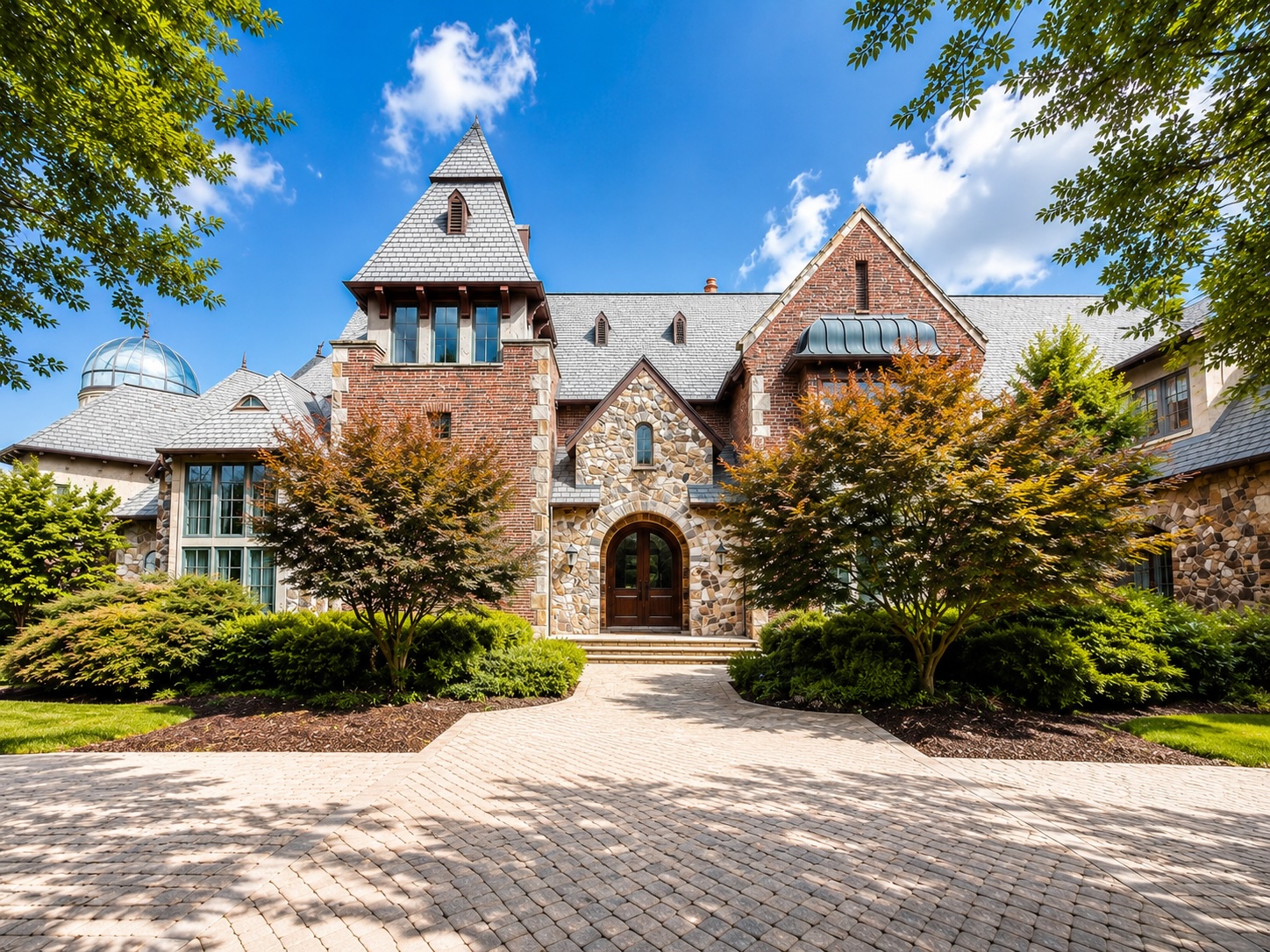
Within the rolling topography of the North Carolina piedmont, in the residential quiet of Union County, a distinct architectural point of view has taken root. The homes of Longview, rising from the fairways and wooded enclaves of the Jack Nicklaus Signature course, are conceived in a tradition of European classicism. This is not a matter of fleeting style, but of architectural conviction. The grand manor homes, with their antecedents in French, English, and Italian country estates, present a vision of permanence and heritage. Yet it is inside, beyond the stone and slate exteriors, that this vision is fully realized. The interior design of a Longview home is not an afterthought; it is an intrinsic continuation of the architectural narrative, a deep and considered exploration of what it means to live with grace, texture, and a quiet sense of history in a thoroughly modern context. It speaks a language of authenticity, where the provenance of a reclaimed beam or the veining in a slab of marble carries as much weight as the overall composition of the room itself.
The choice of a European-inspired interior is a conscious one, a deliberate turn from the disposable and the mass-produced. It represents a commitment to craftsmanship, materiality, and the palpable presence of the human hand. In a world saturated with digital ephemera and rapid-fire trends, these interiors offer a grounding force. They are built upon principles of order, symmetry, and proportion that have guided architects and artisans for centuries, creating spaces that feel both inevitable and deeply calming. This is an aesthetic of substance. The heft of a limestone mantel, the cool touch of a hand-forged iron railing, the subtle depth of a plaster wall—these are daily, tactile reminders of quality. This commitment extends to the unseen, to the very structure and joinery of the home, where custom cabinetry is constructed with the precision of fine furniture and millwork is designed with a scholar’s attention to classical form. The result is an environment that does not shout for attention but rather invites quiet contemplation and a deeper appreciation for the space one inhabits.
These interiors are not, however, museum pieces. They are living homes, designed for the dynamic realities of 21st-century family life. The European tradition at Longview is best understood as a rich and varied language, spoken in several distinct dialects. One finds the rustic elegance and warm, light-infused palette of the French countryside in a kitchen designed for gathering. Elsewhere, the quiet intellectualism and layered comfort of an English manor library provides a sanctuary for work and reflection. The stately, balanced proportions of Georgian architecture inform the graceful flow from one room to the next. Critically, these historical vocabularies are being reinterpreted and adapted by a forward-thinking cohort of designers. They are softening the formal edges, editing the ornamental flourishes, and creating a new synthesis—a transitional style that honors the past while embracing a more relaxed and open way of living, proving that true luxury is not about formal austerity, but about comfort, authenticity, and personal expression.
This ongoing refinement is a testament to the sophisticated ecosystem of design talent that has coalesced in the Charlotte region. The creation of a Longview interior is a deeply collaborative act, a dialogue between discerning homeowners, architects versed in classical traditions, and interior designers who are equal parts artist, historian, and psychologist. These designers are the interpreters and the innovators, guiding clients through a complex process of selection and curation. They commission custom pieces from local artisans, source antique fixtures from European dealers, and oversee the meticulous application of hand-troweled finishes. It is through their vision and expertise that a house becomes a home, a collection of beautiful rooms transformed into a cohesive and deeply personal narrative. They are the quiet authors of Longview’s interior life, shaping spaces that are not only seen, but felt, and destined to endure for generations to come.
The Georgian Ideal: Symmetry, Scale, and Enduring Order
The enduring appeal of Georgian design lies in its quiet authority. Rooted in the classical traditions of Greece and Rome as filtered through the Renaissance, it is an architecture of logic, harmony, and restraint. Within the European-inspired homes of Longview, the Georgian ideal provides a foundational grammar, a set of principles that governs the graceful flow and pleasing proportions of the most successful interiors. This influence is felt not as a rigid stylistic dogma, but as an underlying sense of order and calm. Rooms are arranged along clear, discernible axes, creating vistas that draw the eye through the home. Doorways and windows are placed in balanced compositions, establishing a rhythm that is both stately and serene. The relationship between the scale of a room—its height, width, and depth—and the elements within it is paramount, ensuring that even the grandest of spaces feels harmonious and intimately scaled to human use.
This classical sensibility finds its most articulate expression in the art of millwork. Far from a decorative afterthought, the mouldings, casings, and cabinetry in a Longview home are integral to its architectural integrity. The profiles are often drawn from historical precedents, studied with an academic rigor, yet milled with modern precision to a substantial, satisfying scale. A deep, multi-layered crown moulding does more than conceal the joint between wall and ceiling; it articulates the room’s vertical dimension and casts subtle shadow lines that shift with the day’s light. The pilasters framing a passageway or the entablature above a library bookshelf are not mere ornament, but a continuation of a classical language that speaks of structure and permanence. This bespoke joinery, from the raised panels of a door to the intricate mantelpiece of a fireplace, underscores a commitment to detail that defines the home as a work of custom craftsmanship from the ground up.
Yet, for all its formal discipline, the modern application of Georgian principles in Longview is anything but stiff. Designers and architects are masters of interpretation, understanding how to relax the rules to accommodate the flow of contemporary life. The rigid symmetry of a historical floor plan gives way to more open, interconnected spaces, where a great room might flow into a kitchen, yet each area is defined by subtle architectural cues like a coffered ceiling or a carefully placed cased opening. The palette, while still grounded in classical precedents, is often softer and more atmospheric. The formal symmetry of a room’s architecture is deliberately played against a more relaxed, asymmetrical arrangement of furniture, creating a dynamic tension that is both elegant and inviting. The spirit of Georgian order remains, providing a sophisticated framework for a home that is ultimately designed not for ceremony, but for the comfortable, unpredictable patterns of family life.
The French-Country Palette: A Study in Understated Warmth
The aesthetic of the French countryside, from the sun-drenched farmhouses of Provence to the elegant châteaux of the Loire Valley, is a primary touchstone for Longview’s interior landscape. central to its enduring appeal is a distinctive approach to color. The French-country palette is a study in subtlety and light, a world away from sterile whites or fleeting, trend-driven hues. It is a palette drawn from the natural world—the pale, silvery green of olive leaves, the muted yellow of aging sunflowers, the soft, dusty blue of a late-afternoon sky, and the earthy ochre of limestone soil. These colors are set against a backdrop of warm, luminous whites and creams, the shades of plaster, stone, and aged linen. It is a chromatic language of warmth and welcome, designed to capture and amplify natural light, creating spaces that feel both airy and deeply comforting.
This palette is inseparable from the materials it graces. The genius of the French-country style lies in its celebration of natural textures, and the chosen colors are those that enhance, rather than conceal, the inherent character of wood, stone, and metal. A soft, creamy glaze on a kitchen cabinet highlights the grain of the wood beneath. A wash of pale gray-blue on rough-hewn ceiling beams gives them a sense of age and softness. The characteristic matte, chalky finish of limewash interacts with a stone wall to create a mottled, living surface that no flat paint could replicate. The palette extends to the gleam of unlacquered brass, the dark, solid presence of wrought iron, and the variegated tones of terracotta tile. The interplay of these colors and textures creates a rich sensory tapestry, a layered environment that feels developed over time.
In its contemporary interpretation within Longview homes, the French-country palette is edited and refined for modern sensibilities. Designers deploy these tones to evoke a feeling of rustic elegance without descending into pastoral cliché. A kitchen, the heart of the home, might feature custom cabinets in a soft, muted green or gray, paired with a substantial island of weathered oak and countertops of richly veined Calacatta marble. The walls of a master suite, finished in a warm off-white limewash, provide a serene backdrop for fine linens and antique furniture. The key is balance. The rustic elements are paired with moments of refinement, the soft colors punctuated by clean lines and uncluttered surfaces. It is a style that speaks of relaxed sophistication, creating a bridge between the pastoral and the polished, perfectly suited to a life of elevated ease.
An English Accent: The Library and the Layered Interior
If the French influence speaks to the kitchen and communal spaces, the English tradition often finds its voice in the more private, contemplative corners of a Longview home. The archetype of this aesthetic is the classic English manor library. It is a room conceived as a retreat from the world, a sanctuary for reading, conversation, and quiet reflection. The traditional vocabulary is one of richness and depth: walls paneled in dark, lustrous woods like walnut, mahogany, or oak; shelves lined with leather-bound books; deep, comfortable Chesterfield sofas and wingback chairs upholstered in supple leather or velvet. It is a space designed to embrace and envelop, where the focus is on texture, warmth, and the intellectual weight of accumulated knowledge. The air itself seems different in such a room, imbued with a sense of history and gravitas.
Beyond the specific archetype of the library, the English manor style champions a broader philosophy of layering. This is the art of creating interiors that feel curated and collected, rather than decorated. It embraces the gentle, harmonious friction that comes from mixing periods and provenances. A Georgian settee might be covered in a contemporary textile; a sleek modern lamp may illuminate an antique writing desk; inherited silver and porcelain are displayed alongside abstract art. This approach resists the notion of a home frozen in a single stylistic moment. Instead, it suggests a narrative, the story of a life and a family told through the objects they choose to live with. Patterns are layered with confident ease—a classic tartan throw on a floral chintz armchair, set against a backdrop of striped wallpaper—creating a visual richness that is complex yet cohesive.
Charlotte-area designers have become particularly adept at translating this layered, intellectual English sensibility for a modern American lifestyle. The formal, wood-paneled library is often reimagined as a more versatile study or home office. The paneling might be painted in a deep, moody blue or a warm, elegant taupe, lending the space a contemporary freshness while retaining its architectural integrity. The concept of layering is applied throughout the home, creating sitting rooms and bedrooms that feel personal and deeply comfortable. The key is in the editing. It is not about accumulating clutter, but about the thoughtful juxtaposition of furniture, textiles, art, and objects. The result is an interior that feels intelligent, soulful, and distinctly individual, a testament to the idea that a home should be a reflection not just of taste, but of a life well-lived.
The Art of the Wall: Plaster, Limewash, and Tactile Finishes
In the calculus of luxury interiors, the wall surface has become a canvas for artisanal expression. A quiet rebellion is underway against the flat, inert perfection of standard drywall, a movement that prioritizes texture, depth, and the visible mark of the craftsman's hand. In the finest Longview homes, walls are no longer merely passive backdrops; they are active participants in the design, lending a room a unique atmosphere and a profound sense of substance. This renewed focus on the wall as a tactile, artistic element is a direct link to European building traditions, where surfaces were worked by hand and materials were chosen for their ability to age with grace. It represents a fundamental shift in priorities, an understanding that the quality of a space is determined as much by its feel as by its appearance.
Two ancient techniques, in particular, have been embraced by the region's discerning designers and homeowners: Venetian plaster and limewash. Though often spoken of in the same breath, they offer distinct effects. Venetian plaster is a laborious, multi-layered process involving the application of a putty made from fired limestone, marble dust, and water. Applied with a trowel in thin, translucent coats and then burnished, it results in a surface of remarkable depth and luster, with a cool, marble-like smoothness. It can range from a matte, suede-like finish to a high-gloss polish, creating a surface that seems to glow from within. Limewash, by contrast, is a simpler, more rustic finish. A combination of crushed, burned limestone and water, it is brushed or rolled onto the wall, where it penetrates the surface rather than forming a film on top. The result is a soft, chalky, matte finish with subtle, cloud-like variations in tone, imbuing a room with a sense of calm and aged authenticity.
The successful execution of these finishes depends entirely on the skill of the artisan. This is not work for a standard painting crew. The Charlotte area is home to a select group of craftspeople who have dedicated themselves to mastering these Old World techniques. They understand the chemistry of the materials, the subtle shifts in humidity that can affect an application, and the precise trowel or brush strokes required to achieve the desired effect. Their work is a slow, methodical art form. Watching a master plasterer work a wall is to witness a performance of skill and patience. The deep, resonant beauty of the final surface is a direct result of that human touch, a testament to a reverence for materials and process that is a hallmark of the Longview interior design ethos.
Reclaimed Materials: Beams, Timbers, and the Soul of the Past
In the creation of a new home, perhaps no element introduces a sense of history and soul more powerfully than the integration of reclaimed materials. The use of antique wood, stone, and architectural fragments within Longview’s modern manor homes is a defining characteristic of the local design vernacular. These are not mere decorative applications; they are foundational pieces that bring a tangible narrative into the very structure of the home. A massive timber, salvaged from a pre-industrial Pennsylvania barn or a dismantled French farmhouse, carries the story of its former life in its grain, its mortise pockets, its coloration, and its wear. This inherent history provides an immediate sense of gravity and permanence that newly milled materials, for all their perfection, cannot replicate. Choosing to incorporate these elements is a statement of values, an acknowledgment that character is born of age and experience.
The most visible and celebrated use of reclaimed material is undoubtedly the wooden beam. Spanning the soaring ceiling of a great room, defining the more intimate scale of a kitchen, or adding rustic warmth to a master bedroom, these timbers serve both a structural and a profound aesthetic purpose. They are sourced with care by specialized dealers who salvage them from structures across the country and a new, from Europe. Each beam has a unique identity—hand-hewn oak with its undulating surface, heart pine with its dense grain and rich, amber hue, or weathered cypress with its silvery patina. Their installation is a feat of engineering and artistry, as they are integrated into the home's framework to appear as if they have been there for centuries. They draw the eye upward, adding architectural interest and a crucial layer of natural texture that balances the smooth perfection of plaster walls and polished floors.
Beyond ceiling beams, the practice of reclamation extends to other significant architectural features. Antique French oak flooring, with the subtle undulations and worn patina of generations of footfalls, can be sourced and re-laid to provide a historic foundation for a new room. A centuries-old limestone fireplace surround, imported from a European estate, can become the unequivocal heart of a living room, its carved details softened by time. Even smaller elements, like a set of antique interior doors with their original hardware or a single weathered post used as a structural accent, can have an outsized impact on the atmosphere of a space. These salvaged pieces act as anchors of authenticity, grounding the new construction in a tangible sense of the past and underscoring a design philosophy that values storytelling and soulfulness above all else.
The Quarries of Home: Natural Stone in the Longview Vernacular
Stone is the skeleton of the European country home, the material that gives it structure, substance, and an elemental connection to the earth. This principle is deeply embedded in the design philosophy of Longview, where natural stone is used not as a mere surface covering, but as a foundational element that shapes the character of an interior. The selection of stone is one of the earliest and most critical decisions in the design process, a choice that will dictate palettes, textures, and the very mood of the home for generations. It is a commitment to permanence, to a material that measures its life in geological time. The preference is for stones with a story—those whose veining, fossils, and mineralogical composition speak of their unique origins, whether from the mountains of Tuscany or the plains of the American Midwest.
In the hierarchy of natural stones, the classic white marbles of Italy hold a place of particular reverence. Calacatta and Carrara, quarried from the same region but with distinct personalities, are the preferred choices for spaces that demand a blend of elegance and functionality. Calacatta, with its bright white field and dramatic, thick veining in shades of gray and gold, is often reserved for high-impact applications like a kitchen island or a fireplace surround, where it reads as a work of abstract art. Carrara, known for its softer, grayer background and finer, more linear veining, offers a more subtle and serene presence, frequently used for bathroom vanities, shower walls, and flooring. The art lies in the selection and fabrication of the specific slabs, as designers and stonecutters work together to ensure the veining flows logically across seams and the most beautiful sections of the stone are highlighted.
While Italian marbles lend a classical European prestige, there is also a strong tradition of using American stones that ground these homes in a continental sense of place. Kansas limestone, in particular, has become a favored material for its remarkable warmth and textural character. Its palette ranges from creamy off-whites to pale golden tans, and its surface is often punctuated with small, fossilized artifacts. Less formal than marble, this limestone is prized for flooring in entryways, galleries, and kitchens, where its honed finish provides a soft, durable surface underfoot. It is also frequently used for substantial, hand-carved fireplace mantels and surrounds, its rustic character providing a perfect foil for the refined elegance of plaster walls and antique wood. The thoughtful combination of these different stones—the polished and the honed, the European and the American—creates a sophisticated dialogue of materials throughout the home.
The Cabinetmaker's Art: Bespoke Joinery and Kitchens as Living Spaces
The modern kitchen has completed its evolution from a secluded, utilitarian workspace into the undisputed heart of the home. This shift has demanded a radical rethinking of its design, particularly its cabinetry. In Longview’s European-inspired interiors, the kitchen is conceived not as a collection of boxes, but as a fully furnished room, and its joinery is approached with the same level of artistry and precision as fine furniture. The reliance on mass-produced, modular cabinets is supplanted by a commitment to bespoke design and bench-made construction. Local and regional cabinetmakers, masters of their craft, are engaged to create custom solutions that are perfectly scaled to the room’s architecture and tailored to the specific needs and aesthetic desires of the homeowner. This is a world of exacting detail, where the proportions of a stile, the profile of a door, and the construction of a drawer box are all matters of critical importance.
The vocabulary of this high-level cabinetmaking is rooted in classical forms. Inset doors and drawers, which sit flush within the cabinet frame, are a hallmark of quality, requiring a level of precision far beyond that of a standard overlay door. This clean, crisp look allows the cabinet to read as a solid piece of furniture. Details like integrated end panels, furniture-style toe kicks that resemble the feet of a chest, and custom-designed range hoods that are seamlessly integrated into the surrounding millwork all contribute to this elevated aesthetic. The hardware becomes a crucial finishing touch, with a preference for substantial, tactile pieces in unlacquered brass, polished nickel, or burnished bronze. Appliances, from refrigerators to dishwashers, are often fully integrated, concealed behind custom panels that allow them to disappear completely, preserving the cohesive, furnished look of the room.
The finishes applied to this custom cabinetry are as sophisticated as its construction. While fine woods like walnut or white oak are sometimes left to showcase their natural beauty, painted finishes are more common, allowing for a nuanced and layered color story. The application is a multi-step process, often done by hand, resulting in a deep, lustrous finish that is both beautiful and durable. Subtle glazing techniques may be used to catch in the corners and profiles, lending a sense of age and dimension. Kitchen islands, in particular, have become signature pieces, often finished in a contrasting color or material—a deep, moody blue against surrounding cream-colored cabinets, for instance—and topped with a thick slab of marble or a butcher block of end-grain walnut. They are designed as monumental pieces of furniture, the grand tables around which modern family life unfolds.
Illuminating the Vision: Antique and Artisan Lighting
Lighting in a well-designed interior is not merely a matter of functional illumination; it is a critical design layer that shapes mood, defines spaces, and serves as a primary decorative element. In the European-inspired interiors of Longview, the approach to lighting is deliberate and layered, moving far beyond a simple grid of recessed ceiling fixtures. The goal is to create a rich and varied lighting landscape, a combination of ambient, task, and accent lighting that lends a room dimension and warmth. This philosophy treats light fixtures as the ‘jewelry’ of the home—the sculptural, often historic, pieces that provide a focal point and articulate the design's overall intent. The selection of a chandelier or a pair of sconces is given the same weight and consideration as the choice of a major piece of furniture.
A key element in this approach is the use of antique and vintage lighting. Sourced from dealers in legendary markets like those in Paris or from specialized galleries closer to home, these fixtures bring with them an irreplaceable sense of history and craftsmanship. A glittering Murano glass chandelier from the mid-20th century suspended in a two-story foyer makes a statement of glamorous intent. A set of heavy, hand-forged iron sconces from a Spanish villa flanking a limestone fireplace adds a layer of rustic gravitas. The gentle, timeworn patina of an old brass lantern hanging in a hallway or the delicate details of a French crystal girandole in a dining room cannot be convincingly replicated. These pieces are not just sources of light; they are storytellers, connecting the new home to a longer lineage of design and artistry.
Complementing the use of antiques is a burgeoning appreciation for contemporary artisan lighting. The Charlotte region and the broader Southeast are home to a growing number of makers who are creating a new generation of custom fixtures. These artisans often work with traditional materials—iron, bronze, brass, hand-blown glass—but they employ a modern design sensibility. A hand-forged iron lantern might be simplified to its essential geometric form. A classic pendant shape might be reinterpreted on a grander, more dramatic scale. These custom-made pieces function as unique sculptural interventions within the home. They can bridge the gap between traditional architecture and more contemporary furnishings, or they can provide a bold, artistic statement that becomes the centerpiece of a room. This thoughtful mix of antique and modern artisan lighting ensures the interior feels both timeless and current, a curated collection of light that is as beautiful as the spaces it illuminates.
The Charlotte Design Vanguard: Interpreting the European Tradition
The consistent and elevated expression of European interior design in Longview is not a happy accident. It is the result of a cultivated community of design professionals in and around Charlotte who possess a rare and specific expertise. This vanguard of interior designers, architects, and builders has developed a shared language and a deep understanding of historical precedents, coupled with a keen sensitivity to the demands of modern luxury living. They are scholars of their craft, able to fluently reference the proportions of a Georgian room, the palette of a Provençal farmhouse, or the material richness of an English library. But they are not mere copyists. Their true talent lies in their ability to act as editors and interpreters, selectively drawing upon these historical traditions to create homes that are both authentic to their roots and perfectly attuned to the 21st century.
The approach of these leading designers is characterized by a holistic and deeply collaborative process. The interior design is not considered in a vacuum; it begins at the earliest stages of architectural planning. The designers work hand-in-glove with the architect to ensure that the interior flow, the scale of the rooms, the placement of windows, and the architectural detailing all align with the ultimate vision for the home’s furnishings and atmosphere. This synergy prevents the common disconnect between a home’s exterior statement and its interior life. It is a process built on dialogue, not just with their professional peers, but most importantly with the clients themselves. They are masterful at drawing out a client’s personal narrative and aesthetic inclinations and weaving them into the fabric of the design, ensuring the final product feels like a true and personal reflection of the inhabitants.
This community of practice extends to a network of a highly skilled craftspeople and artisans who can execute these ambitious designs. The designers act as directors, orchestrating the work of expert cabinetmakers, plaster artisans, metalworkers, and stonecutters. They know who to call for a hand-forged iron railing, a custom-milled run of complex moulding, or a perfectly book-matched marble installation. This local and regional ecosystem of talent is what allows the vision to become a reality at the highest level of quality. It is this combination of scholarly knowledge, interpretive skill, collaborative spirit, and access to master craftsmanship that has made the Charlotte design community a recognized authority in creating these enduring, European-inspired homes. They are the custodians of a tradition, but also its vital innovators.
The Transitional Moment: Softening Formality for Modern Family Life
While the foundations of Longview’s interiors are firmly rooted in classical European design, the prevalent expression of the style is best described as transitional. This represents a crucial evolution, a deliberate softening of historical formalism to create spaces that are more comfortable, versatile, and aligned with the way families live today. It is not an abandonment of the principles of symmetry, scale, and architectural integrity, but rather a rebalancing of priorities. In this transitional model, ease of living and an atmosphere of welcome are elevated to the same level of importance as historical correctness. The resulting interiors possess a unique duality: they are elegant enough to host a formal gathering, yet relaxed and durable enough for everyday family life, from children’s homework at the kitchen island to a movie night in the great room.
The mechanics of this transitional style are evident in both floor plans and furnishings. The historically accurate model of a home as a series of distinct, enclosed rooms gives way to more open and flowing layouts. A large great room may combine living and dining areas, with the spaces defined by furniture groupings and architectural elements like ceiling treatments or area rugs, rather than by walls. In the realm of furnishings, the transitional approach is defined by the art of the mix. A sofa might have a classic English roll-arm profile but be upholstered in a highly durable modern performance fabric. An antique French commode with a marble top might be paired with a sleek, contemporary armchair. The ornate carving and gilded finishes of the past are used sparingly, as accent pieces, while the larger, foundational furnishings tend toward cleaner lines and less ostentation.
This shift also reflects a change in how luxury itself is defined. The new luxury is less about conspicuous displays of wealth and more about personal comfort, quality materials, and ease of maintenance. The magnificent but fragile silk damask of a past era is replaced by rich velvets, bouclés, and linens that are both beautiful to the touch and resilient enough to withstand daily use. The goal is to create a 'no-go' zone-free home, where every room is meant to be lived in and enjoyed. This transitional sensibility is perfectly suited to the Longview lifestyle, offering a framework for homes that are at once deeply respectful of tradition and fully engaged with the present. It proves that elegance and comfort are not mutually exclusive, but are in fact the essential components of a truly sophisticated modern home.
The Return of Warmth: Tones, Textures, and Tactile Comfort
For a period, a certain strain of minimalist design held sway, promoting a palette of cool grays and stark whites, often realized in flat, unadorned surfaces. While clean and photogenic, this aesthetic could often feel austere and impersonal in practice. A significant counter-movement is now reshaping the landscape of high-end interiors, a current that runs strongly through the homes of Longview: the return of warmth. This is not a revival of the heavy, dark palettes of a distant past, but a sophisticated, nuanced exploration of warmer tones, richer textures, and an overall emphasis on creating environments that feel enveloping and reassuring. It signals a collective desire for homes that are not just visually pleasing, but emotionally comforting—true sanctuaries from the complexities of the outside world.
This new warmth begins with the color palette. The cool grays are being replaced by a complex family of warmer neutrals: taupes that hover between gray and brown, creamy whites with a hint of yellow or pink, and shades of mushroom, camel, and sand. These colors provide a soft, welcoming foundation that feels more organic and less clinical than pure white. When stronger colors are used, they are often drawn from a rich, earthy spectrum. Deep olive greens, burnished golds, terracotta reds, and moody ink-blues are being used in studies, powder rooms, and dining rooms to create spaces that are intimate and dramatic. The effect is a palette that feels both grounded and deeply sophisticated, offering a sense of coziness without sacrificing an ounce of chic.
Perhaps even more than color, the defining feature of this warmer aesthetic is its profound emphasis on texture. In a transitional Longview interior, a tactile journey unfolds in every room. The nubby weave of a bouclé-covered sofa invites one to sit. A heavy, knitted cashmere throw draped over a chair promises comfort. The dense pile of a wool and silk rug provides a satisfying softness underfoot. The layering of these textures is paramount. A single room might contain the smoothness of a leather ottoman, the plushness of a velvet pillow, the slight roughness of a linen curtain, and the chunky weave of a performance fabric. This textile richness creates a visual and sensory depth that makes a space feel curated and complete. It is a design approach that engages more than just the eye, transforming the home into a haven of tactile comfort.
Curating a Life: Art, Antiques, and the Personal Narrative
When the architectural shell is perfected, the walls are finished, and the foundational furnishings are in place, the final and most crucial layer of a Longview interior is applied: the personal one. This is the stage where a house, however beautifully designed and executed, is transformed into a home. It is accomplished through the thoughtful curation of art, antiques, books, and collected objects—the unique artifacts that tell the story of the people who live there. A successful interior in this tradition is never a static showroom of a designer’s taste; it is a living, evolving portrait of the homeowners' lives, passions, and travels. This final, personal layer provides the soul of the home, its singular and inimitable character.
The art of creating these personal narratives lies in the masterful mixing of styles, periods, and provenances. The strong, classical bones of a Longview home provide a surprisingly versatile backdrop for a wide range of artistic expressions. A large, bold abstract painting can create a thrilling point of tension and modernity when hung above a very traditional, 18th-century-style fireplace mantel. A sleek piece of contemporary sculpture might find its perfect home in a graceful, curved niche that harks back to Roman architecture. The dialogue between old and new is dynamic and energizing. Similarly, antiques are used not just for their historical weight but for their ability to bring a unique form or patina into a room. A Biedermeier chest, a Gustavian mirror, or a rustic farm table can introduce a different accent and sensibility into the prevailing European a esthetic, making the whole composition feel richer and more worldly.
The role of the interior designer in this final stage is often that of a curator and editor. Having established a deep understanding of the client's personality and lifestyle, the designer can help them articulate their personal story through the objects they display. This may involve guiding clients to galleries or antique shops, helping them frame and hang existing art collections in more impactful ways, or simply arranging books and objects on a shelf in a manner that feels both artful and natural. The goal is to avoid a look that feels staged or overly 'decorated.' Instead, the aim is to achieve an effortless elegance, a sense that each object has found its rightful place over time. It is this final, deeply personal act of curation that ensures a Longview home is not just a masterpiece of design, but a true and authentic reflection of a life well-lived.
Translating this vocabulary into finished rooms is largely a matter of selections — stone, millwork, plaster, textiles — made in sequence with the architecture; further reading on Charlotte interior design covers how those selections are typically planned.
Questions & Answers
Is European-inspired design in Longview purely traditional?
Not at all. The prevailing style is more accurately described as transitional. It uses classical European principles of scale, symmetry, and materials as a foundation but updates them for contemporary living with more open layouts, comfortable furnishings, and a less formal attitude.
What is the difference between plaster and limewash for wall finishes?
Plaster, especially Venetian plaster, involves applying multiple thin layers to create a smooth, often polished surface with significant visual depth. Limewash is a paint-like coating made from limestone that penetrates the wall surface to create a soft, chalky, matte finish with subtle tonal variations.
Why are reclaimed materials like old beams so frequently used?
Reclaimed materials bring a sense of history, character, and authenticity that is impossible to replicate with new materials. The aged patina, grain, and imperfections of old wood add warmth and a narrative element to a room, suggesting a story that transcends the home's actual construction date.
What defines the "French-country palette"?
The French-country palette is inspired by the light and landscape of rural France. It moves beyond simple creams and includes a range of soft, muted colors like grayish-blues, gentle yellows, soft greens, and earthy ochres, often set against warm white or stone backdrops.
How do designers make formal rooms, like an English-style library, work for a modern family?
Designers adapt these formal concepts by focusing on comfort and function. An English library might be panelled in a lighter wood or a painted finish instead of dark mahogany, feature deep, comfortable sofas in durable fabrics, and integrate modern technology discreetly within custom cabinetry.
What types of natural stone are common in these homes?
Classic Italian marbles like Calacatta and Carrara are frequently selected for kitchens and primary bathrooms. For flooring, hearths, and architectural accents, a warmer, more textural American stone like Kansas limestone is often used to ground the interiors.
What is a "transitional" interior?
A transitional interior is a blend of traditional and contemporary design. It marries the timeless elegance of traditional aesthetics—relying on classic lines and materials—with the clean profiles and pared-down sensibility of modern design, resulting in a space that feels both fresh and enduring.
Is this design style compatible with collecting contemporary art?
Absolutely. The clean lines and architectural integrity of European-inspired interiors provide a superb backdrop for contemporary art. The contrast between a modern painting and traditional millwork, for example, can create a dynamic and sophisticated dialogue within the space.
The Houses Behind This Guide
A short list of firms Longview owners rely on for property, design, construction and technology. Each keeps its own website, and every conversation happens there rather than here.
Peters & Associates, Inc.
When an estate inside the gates changes hands quietly, it is usually this desk on one side of the table.
Emerald & Oak Design
A small studio with a long memory for proportion, working in plaster, oak, stone and restrained color.
Peters Custom Homes, Inc.
The builder behind a number of Longview's most considered houses, and the renovations that quietly saved others.
Peters Audio Video
Sound, cinema, lighting and control designed to disappear into the architecture instead of competing with it.
The Peters Team
The people who actually walk the streets here — street by street, lot by lot, on behalf of a private client roster.